
This is a diptych painting titled The Crucifixion (left side) and The Last Judgement (right side) by Jan Van Eyck. This is a Northern Renaissance painting, Van Eyck, born in 1390, hailed from a town in the Netherlands called Maaseik. The two paintings portray the two biblical stories of the crucifixion of Jesus Christ and the following, inevitable judgement - damnation - salvation of all souls. In the both paintings we see themes of repentance and sin, we also see a blatant transition from Christ as a victim to his divine transfiguration. This transition of also seen among the people, who in the left painting, appear to be rejoicing in the death of Christ (except for the women on the bottom). This is in stark opposition the to the right painting where people are either begging Jesus for mercy or rejoicing in their salvation. Both painting are largely symmetrical as well as similar in their use of implied depth. As this is a portrayal of two biblicale vents, there is obvious religious iconography in both paintings. There are many qualities this signify that this is a Renaissance era painting, such as its colorful quality. Being a painting frm Northern Europe, there is more focus on the background nature and it's complexities. There is also focus on elements of realism, a signature of renaissance art.
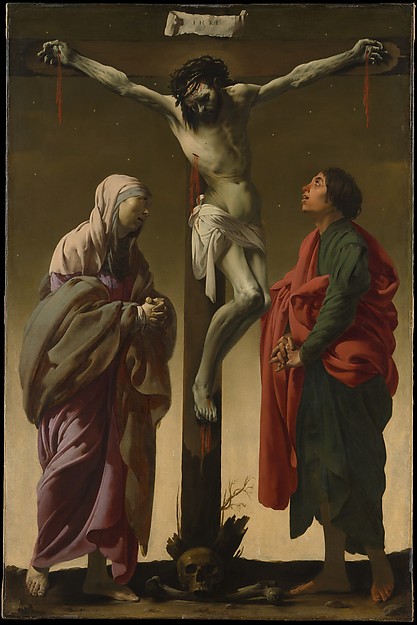
This is a Baroque painting by Hendrick ter Brugghen titled, The Crucifixion with the Virgin and Saint John, dated between 1624 - 1625. Hendrick is a painter from The Hague, a city in the Netherlands. This painting is another portrayal of the crucifixion of Christ, accompanied by the virgin Mary and Saint John. There are themes of anguish and darkness shown in this painting. This is a scene taken from the gospel of John where Jesus proclaims his love for the "mother" and the "son". This is a symmetrical work and there is a use of implied line from the eyes of St.John and Mary. The colors are mostly monochromatic with the different shades of brown. There is a heavy use of iconography, the skull on the bottom is the supposed skull of Adam. The dramatic expressions and dark lighting is an archetype of Baroque are paintings. Although Baroque was characterized by the end of the reliance of the church but it is believe that this painting was commissioned by a church.

No comments:
Post a Comment