Jacob Lawrence had a central theme to his work which was Blackness. He was very concerned with the black workforce at the time, Black History, Black celebration (Harlem Renaissance) and black education. The style of his work was influence by European Expressionism and cubism as seen in his painting The Shoemaker.The flatness of the painting and the use of bold colors is an attribute of expressionism that is used here. Also, the sharp geometric lines of the man is has an aspect of cubism in it. We also have exaggerated, elongated lines that was common in the works of artist like Kirchner.
Saturday, June 11, 2016
#5
Jacob Lawrence had a central theme to his work which was Blackness. He was very concerned with the black workforce at the time, Black History, Black celebration (Harlem Renaissance) and black education. The style of his work was influence by European Expressionism and cubism as seen in his painting The Shoemaker.The flatness of the painting and the use of bold colors is an attribute of expressionism that is used here. Also, the sharp geometric lines of the man is has an aspect of cubism in it. We also have exaggerated, elongated lines that was common in the works of artist like Kirchner.
#4
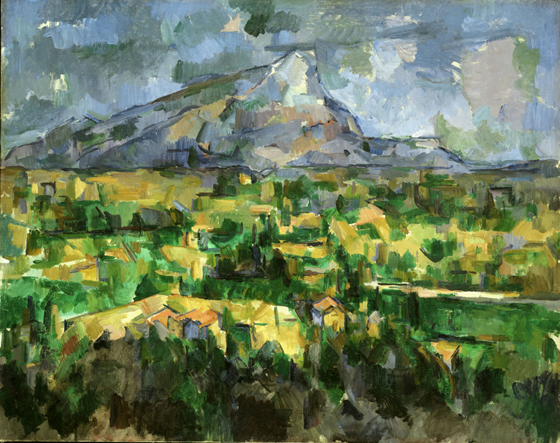
Where impressionism referred to the immediate reaction to the painters surroundings which led to an emphasis on color and rhythm over form and content. Post-impressionism was an alteration to this thinking, some artist sought to place more emphasis on form such as Cezanne. Seen in his painting, Mont Sainte-Victoire, the common qualities of Post-Impressionism is shown here, one of which is the space is flattened and depth is given through the colors which get cooler the farther back it gets. The paint in this seems quickly drawn and rhythmic as if Cezanne was directly responding to what he saw.
Romanticism was a respond to the enlightenment where they put more focus on emotional expression over reason. In Joseph Mallord William Turner's The Burning of the Houses of Lords and Commons expresses the emotion through the dramatic lengths in which he paints the fire. The way it was painted shares a similarity with post-impressionism in its expressive brushstrokes and liberal interpretation of the scene. The contrast of light and dark is another staple of romanticism, seen here there is a contrast between the light yellow-orange fire and the dark shading of the onlookers in the foreground.

Romanticism was a respond to the enlightenment where they put more focus on emotional expression over reason. In Joseph Mallord William Turner's The Burning of the Houses of Lords and Commons expresses the emotion through the dramatic lengths in which he paints the fire. The way it was painted shares a similarity with post-impressionism in its expressive brushstrokes and liberal interpretation of the scene. The contrast of light and dark is another staple of romanticism, seen here there is a contrast between the light yellow-orange fire and the dark shading of the onlookers in the foreground.
Friday, June 10, 2016
Wednesday, April 6, 2016
This is a diptych painting titled The Crucifixion (left side) and The Last Judgement (right side) by Jan Van Eyck. This is a Northern Renaissance painting, Van Eyck, born in 1390, hailed from a town in the Netherlands called Maaseik. The two paintings portray the two biblical stories of the crucifixion of Jesus Christ and the following, inevitable judgement - damnation - salvation of all souls. In the both paintings we see themes of repentance and sin, we also see a blatant transition from Christ as a victim to his divine transfiguration. This transition of also seen among the people, who in the left painting, appear to be rejoicing in the death of Christ (except for the women on the bottom). This is in stark opposition the to the right painting where people are either begging Jesus for mercy or rejoicing in their salvation. Both painting are largely symmetrical as well as similar in their use of implied depth. As this is a portrayal of two biblicale vents, there is obvious religious iconography in both paintings. There are many qualities this signify that this is a Renaissance era painting, such as its colorful quality. Being a painting frm Northern Europe, there is more focus on the background nature and it's complexities. There is also focus on elements of realism, a signature of renaissance art.
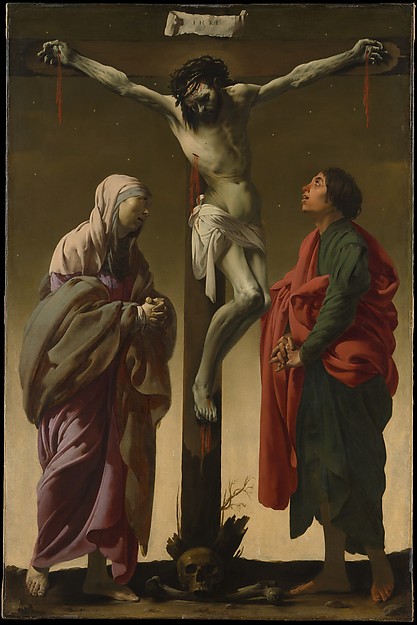
This is a Baroque painting by Hendrick ter Brugghen titled, The Crucifixion with the Virgin and Saint John, dated between 1624 - 1625. Hendrick is a painter from The Hague, a city in the Netherlands. This painting is another portrayal of the crucifixion of Christ, accompanied by the virgin Mary and Saint John. There are themes of anguish and darkness shown in this painting. This is a scene taken from the gospel of John where Jesus proclaims his love for the "mother" and the "son". This is a symmetrical work and there is a use of implied line from the eyes of St.John and Mary. The colors are mostly monochromatic with the different shades of brown. There is a heavy use of iconography, the skull on the bottom is the supposed skull of Adam. The dramatic expressions and dark lighting is an archetype of Baroque are paintings. Although Baroque was characterized by the end of the reliance of the church but it is believe that this painting was commissioned by a church.
Thursday, March 31, 2016
Design Principles in Art!
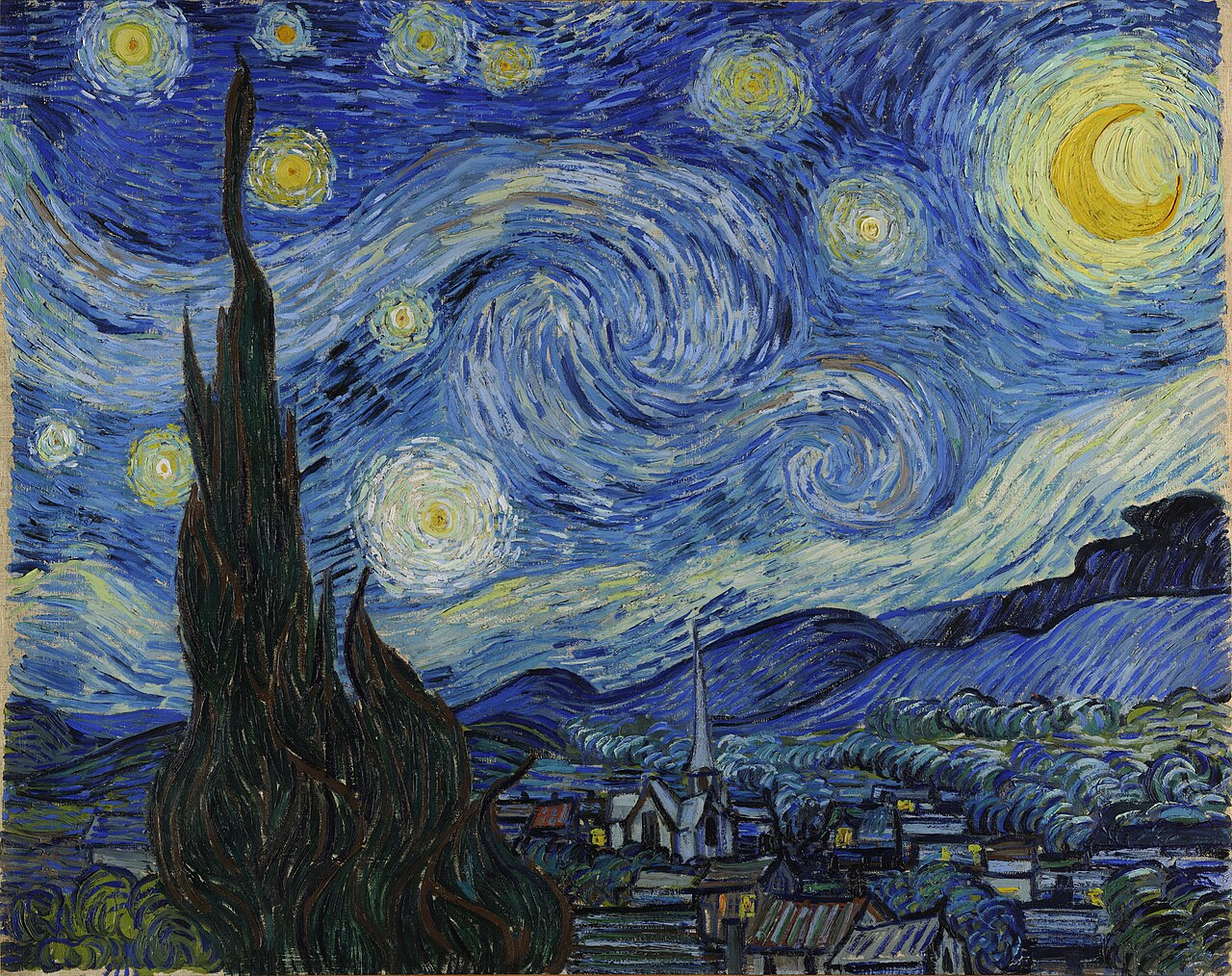
Artist can unify their art work through a multitude of ways, one of them being through the way different colors interact with one another, their contrast or similarities can portray a vivid image such as the one above. That is a painting by Vincent Van Gogh titled, Starry Night, the different shades of blue combined with the bright yellow unify the image to create a picture of a night sky filled with stars. A sense of unity is felt through the shapes of a painting, the swirling pattern of the night sky as well as other wavy pattern unifies the painting with a surrealistic sense of movement.
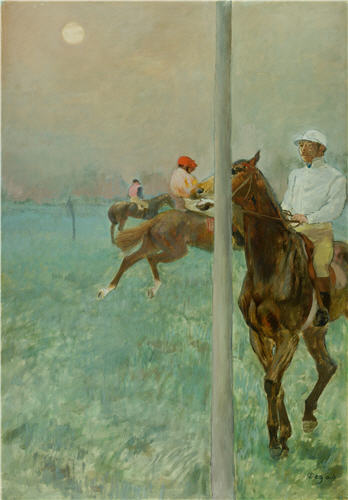
Asymmetrical balance is created through the various balances of small and large forms, light and dark, and the differences in color. In this painting, Jockeys Before the Race, the tree trunk that cuts through the middle is used as a focal point, it creates a balance with the figures behind it which also creates an illusion of depth. The light warm colors of the horse riders and the dark brown colors of the horses creates a balance between light and dark. There is also a balance as you view the painting from right to left the images appear smaller.
Scale can be used to
signify distance, importance or simply to inspire wonder through its size. In
the realistic sculpture by Rob Mueck, we see a very large sculpture can “Standing
Woman”. The size of the sculpture in relation to the size of the viewer is made
to conjure feeling of awe, the act of looking up can also intimidate the
viewer. The realistic qualities of the sculpture works in contrast with the
totally unrealistic size which gives it a literal larger than life persona.
Wednesday, March 16, 2016
Women of Egypt and Greece
The female statues from Egypt and Greece share some stark differences and subtle similarities that can be observed. The Egyptian statue shown on the left is a more interpretive approach to depicting the female form. It does not have a distinct appearance, lacks lower legs and is covered in tattoos and blue paint. The figure is small (5 inches) and was usually placed in burials. Female figures such is this symbolized the power of giving birth and sexual attraction, through this the dead which it is buried with would be able to create life. Although it does portray some typical egyptian features at the time, such as the hair, it is largely meant to be a symbolic figure which is different from the roman statues.
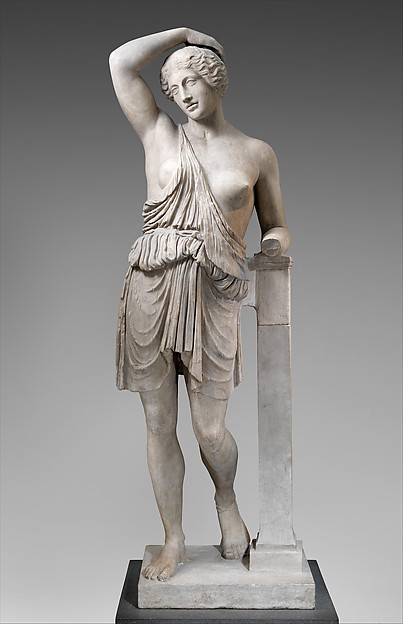
Roman sculptures such as the one one the right took a more literal approach to depicting the female form. This statue is depicting a mythical warrior race of women called amazons. Despite the amazons often being depicted as resilient, this is one of a wounded warrior who has lost her weapon and whose outfit has become undone. This is a much larger figure than the egyptian one and is made from marble where the other was made from faience (a type of ceramic). Whereas the egyptian figure was used from burials, this statue probably was place in an area to represent a type of ceremony.
Subscribe to:
Posts (Atom)